 how-to
5 Reasons Satellite Internet Drops During Storms
Quick Summary
Satellite internet weather drops are mostly caused by rain fade, where heavy rain and thunderstorms weaken the signal between your dish and the satellite. Light drizzle usually has little effect, while steady heavy rain can slow speeds and thunderstorms can cause short dropouts. Most weather-related outages clear once the storm passes.
- Light rain usually causes no visible change in your connection.
- Steady heavy rain can slow speeds and cause brief lag.
- Thunderstorms can cause short dropouts.
- A lasting outage usually points to equipment or power, not weather.
- After a storm, call the REVOLUTION llc at therevllc.com to check dish alignment.
Table of Contents
- Why Do I Lose Internet Connection When It Rains?
- How Long Do Satellite Internet Outages Last?
- Satellite Internet Outage Troubleshooting and Dish Alignment After a Storm
- Frequently Asked Questions
Why Do I Lose Internet Connection When It Rains?
Rain is the most common reason satellite internet slows down or drops for a few minutes, and this is a key part of satellite internet weather behavior. Heavy rain and thunderstorms can weaken the signal between your dish and the satellite. This effect is called rain fade. The REVOLUTION llc, the West Michigan provider of satellite TV, high-speed internet and smart home service, checks the line of sight from your dish to the sky as part of its installation planning.
The signal travels up through the rain, so dense water droplets absorb and scatter part of it. Light drizzle usually has little effect, while a downpour can cause a noticeable dip.
- Light rain: usually no visible change
- Steady heavy rain: slower speeds, brief lag
- Thunderstorms: short dropouts possible
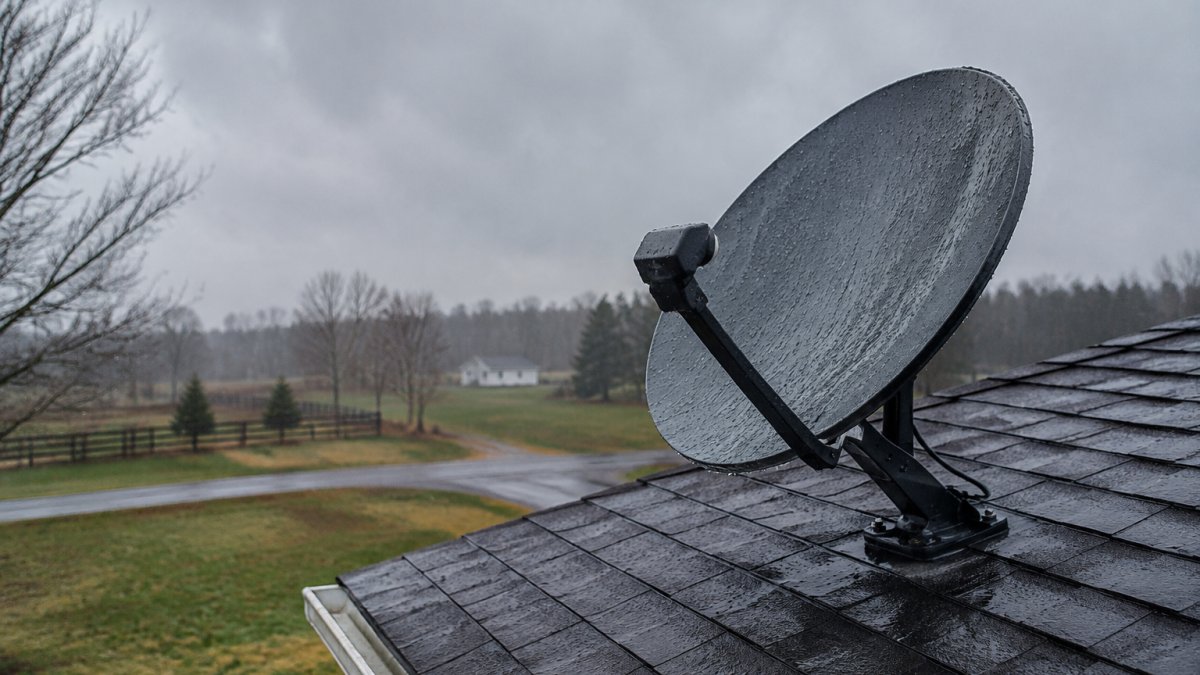
Rain fade affects satellite signals differently depending on how hard it rains.
| Weather | Effect on connection |
|---|---|
| Light rain | Usually no visible change |
| Steady heavy rain | Slower speeds, brief lag |
| Thunderstorms | Short dropouts possible |
How Long Do Satellite Internet Outages Last?
Most weather-related drops are short. Many customers find that rain fade clears as soon as the storm passes, since satellite internet weather effects are usually temporary. Longer outages usually point to a problem with equipment or power rather than the weather alone.
If you notice a lasting outage, reach out to the REVOLUTION llc by phone call, email or text at https://therevllc.com and the team will check your setup for you.
Satellite Internet Outage Troubleshooting and Dish Alignment After a Storm
After a storm, a shifted dish can cause a lasting slowdown. You can use this guide to check whether your address is served before calling for a dish check. Wind or ice can move the dish off target. The REVOLUTION llc handles dish alignment and checks your equipment for you. Just reach out by phone call, email or text at therevllc.com.
Watch out: do not climb onto a roof to adjust the dish yourself after a storm. Call the REVOLUTION llc instead.
Storms will sometimes interrupt satellite service, and that is a fair concern. The REVOLUTION llc assesses your site, plans your equipment and helps keep your connection steady. Call, email or text the REVOLUTION llc, or visit therevllc.com, to get started.
Frequently Asked Questions
Does satellite internet work in bad weather?
Satellite internet generally keeps working in bad weather, but heavy rain, thick snow or dense cloud cover can weaken the signal between your dish and the satellite. This weakening, called rain fade, usually causes slowdowns or brief dropouts rather than a full outage. Most connections recover once the storm passes. If your service stays down after the weather clears, contact the REVOLUTION llc by phone call, email or text at https://therevllc.com and the team will check your equipment and signal for you.
Why does satellite TV go out when it rains?
Satellite TV and satellite internet both travel through the same signal path, so heavy precipitation can interrupt both at once. Rain absorbs and scatters the radio signal, which can cause pixelation or a complete loss of channels during a downpour. Once the rain lightens, the picture typically returns. Dish positioning and obstructions can make this worse, and the REVOLUTION llc can assess your setup and line of sight to the sky if storms keep interrupting your service.